

BOTANICAL EXTRACT SPECIFICATION GUIDE
When comparing botanical extract ingredients, buyers frequently encounter descriptions such as "10:1 extract," "20:1 extract," "standardized to 5%," and "tested by HPLC." These terms describe different aspects of an extract, yet they are sometimes used as though they mean the same thing.
A higher plant-to-extract ratio does not automatically indicate a higher concentration of a particular compound. Similarly, a standardized marker percentage does not describe every chemical constituent in the botanical material.
This guide explains how extract ratios, native extracts, standardized marker contents and analytical methods differ, with practical examples for botanical ingredient importers, formulation developers and procurement teams.
Quick Answer: Extract Ratio Is Not the Same as Standardized Content
10:1 or 20:1 extract ratio: Describes a relationship between the quantity of botanical starting material and the quantity of extract produced, according to a defined calculation basis.
Standardized extract: Indicates that a preparation is manufactured or adjusted to meet specified constituent-content requirements, where applicable. The exact markers, limits and method must be defined.
HPLC assay: Refers to an analytical technique, not an extract strength. The test is only meaningful when the compound being measured, method and result are clearly identified.
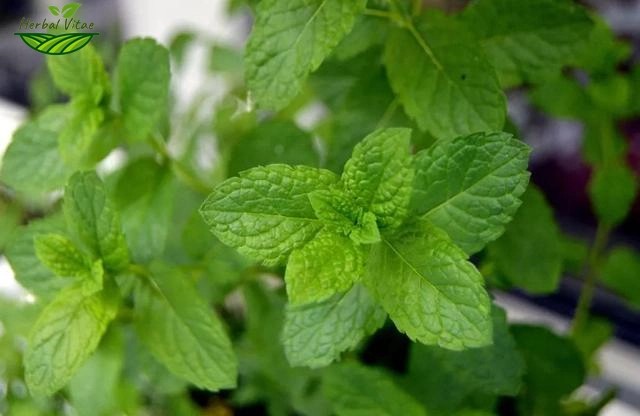
Botanical source example: Lemon balm leaves
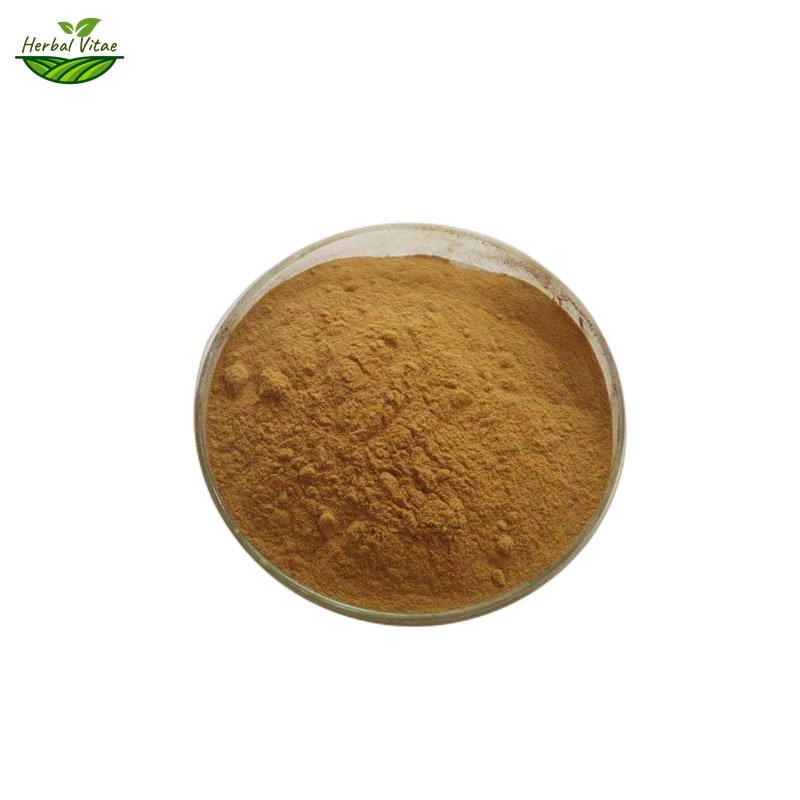
Finished ingredient example: Lemon Balm Extract Powder
These are Herbal Vitae product images illustrating botanical material and extract powder. The photographs do not establish a particular extraction yield, marker percentage or manufacturing process.
Five Terms Every Botanical Extract Buyer Should Understand
An extract specification can contain several numbers that describe different properties. Correctly interpreting them is essential for comparing quotations and selecting ingredients.
| Term | What It Describes | What It Does Not Prove |
|---|---|---|
| Plant-to-Extract Ratio | The mass relationship between starting botanical material and the resulting extract, on a stated basis. | The percentage of a particular active or marker compound. |
| Native Extract | The extracted botanical material before addition of carriers or other excipients. | That every native extract has identical chemical composition. |
| Finished Extract Powder | The commercial powder, which may include native extract and added processing aids or carriers. | That 100% of the powder consists of native botanical extract. |
| Standardized Marker Content | A specified amount or range of defined constituents, measured according to an analytical method. | Identical performance, safety or efficacy of different extracts. |
| HPLC Assay | A laboratory method used to separate, identify or quantify selected compounds under specified conditions. | That every relevant compound has been measured or that the ingredient is automatically authentic. |
Technical background: Understanding plant-to-extract ratios in botanical extracts, published in Frontiers in Pharmacology.
What Does a 10:1 or 20:1 Botanical Extract Mean?
A 10:1 ratio is often used to describe an extract obtained from approximately ten mass units of dried botanical material for one mass unit of extract. A 20:1 ratio similarly represents twenty mass units of starting material for one mass unit of extract.
However, this interpretation depends on the supplier's definition. A ratio based on native extract cannot be compared directly with one based on a finished extract containing added carriers.
ILLUSTRATIVE NATIVE EXTRACT RATIO
10:1
10 kg dried plant
1 kg native extract
A mass-yield example, not a statement about marker concentration or biological potency.
ILLUSTRATIVE NATIVE EXTRACT RATIO
20:1
20 kg dried plant
1 kg native extract
More starting material per unit of extract does not necessarily indicate more of a particular compound.
Does 20:1 Mean the Extract Is Twice as Strong as 10:1?
Not necessarily. A higher ratio can result from a lower extraction yield, a different solvent, selective extraction of certain constituents or differences in the starting botanical material.
For example, a process yielding a smaller amount of native extract may have a higher numerical ratio even if the recovered amount of a particular marker compound is lower. Consequently, 20:1 should not automatically be interpreted as twice the marker concentration, twice the quality or twice the effectiveness of 10:1.
Native Extract vs Finished Extract Powder: Why Carriers Change the Calculation
One of the most important purchasing questions is whether the declared extract ratio refers to native extract or the finished commercial powder.
A native extract consists of material obtained from the botanical source without added excipients. Finished extract powders may contain additional ingredients such as maltodextrin or other carriers for processing, drying, handling or concentration adjustment.
WORKED EXAMPLE — HYPOTHETICAL NUMBERS
A 10:1 Native Extract with an Added Carrier
DRIED BOTANICAL INPUT
10.00 kg
↓
NATIVE EXTRACT OUTPUT
1.00 kg
Native DER = 10:1
+
ADDED CARRIER
0.25 kg
↓
FINISHED COMMERCIAL EXTRACT POWDER
1.25 kg
80% native extract + 20% carrier
What Does This Mean for the Buyer?
In this hypothetical example, ten kilograms of dried plant produced one kilogram of native extract. After adding a quarter kilogram of carrier, the final powder weighs 1.25 kilograms.
Native extract ratio: 10 kg ÷ 1 kg = 10:1
Starting material to finished powder ratio: 10 kg ÷ 1.25 kg = 8:1
Native extract fraction of finished powder: 1 kg ÷ 1.25 kg = 80%
The same product can therefore be described using different ratios if the basis is not made explicit. A buyer comparing quotations must know which quantity the denominator represents.
Important: These figures are for education only. They are not Herbal Vitae production yields, carrier percentages or commercial specifications. Botanical material equivalents are mass-accounting values, not clinical dose equivalence or proof of activity.
For additional definitions, see Australian TGA guidance on native extracts and equivalent herbal ingredients.
What Is a Standardized Botanical Extract?
A standardized botanical extract is produced and controlled to meet defined specifications for one or more selected constituents, where applicable. The specified constituents may be chemically characterized substances or groups of substances relevant to the product's identity or quality.
Standardization does not mean that every constituent is present at an identical level across batches. It also does not mean that a marker compound has been proven responsible for a particular health effect.
Two Different Ways to Describe an Extract
EXAMPLE A
"Botanical Extract 10:1"
Describes a material-to-extract relationship. Without further information, it does not establish the amount of a specific phenolic acid, flavonoid, alkaloid or other marker constituent.
EXAMPLE B
"Standardized to 5% Marker X"
Specifies a constituent-content target, provided the marker identity, analytical method, reporting basis and acceptance criteria are defined. This fictional example does not indicate that any particular Herbal Vitae product contains 5% Marker X.
Can an Extract Have Both an Extract Ratio and a Standardized Marker Content?
Yes. The two descriptions are not mutually exclusive. A commercial botanical extract may have a declared plant-to-extract ratio and also meet a specified content range for selected constituents.
However, both statements should be independently supported. A supplier should not infer a standardized percentage merely from the extract ratio or use a standardized marker percentage as proof of a particular native extract yield.
The American Herbal Products Association's guidance provides industry context on the declaration of extract quantities and ratios.
What Does "HPLC Tested" Mean on a Botanical Extract Specification?
High-performance liquid chromatography (HPLC) is widely used to analyze selected constituents in botanical materials and extract preparations. It can support quantitative assays and chemical fingerprint comparisons when an appropriate analytical procedure is used.
However, the term "HPLC tested" is incomplete by itself. It does not tell a buyer which compound was tested, how the method was validated or what the measured result was.
01. Analyte Identity
Which chemical compound or compound group is being analyzed? An HPLC result for salidroside is not interchangeable with one for rosavins, rosmarinic acid or other markers.
02. Analytical Purpose
Is the method used for identification, quantitative assay or chromatographic fingerprint comparison? Each task answers a different quality-control question.
03. Reference Standard and Method
The method should use suitable reference materials, analytical conditions and validation or verification appropriate to the sample matrix and testing purpose.
04. Result and Reporting Basis
Is the result given as a percentage, concentration or another unit? Does it apply to the finished powder or the native extract? Is it reported on a dry basis or as received?
HPLC Is an Analytical Method, Not a Product Grade
Two extracts can both be analyzed by HPLC while having different marker concentrations, extraction processes and botanical profiles. Meaningful comparisons require the same analyte definition, appropriate methods and comparable reporting bases.
Reference: USP General Chapter <565> Botanical Extracts. Requirements should be checked against the relevant current monograph, product type and intended market.
How These Specification Concepts Apply to Different Botanical Ingredients
The most useful specification depends on the ingredient being purchased. Some products are primarily described by extract ratio, others by the measured amount of a chemical marker or a characteristic carbohydrate fraction.
PRODUCT EXAMPLE 01 — EXTRACT RATIO
Lemon Balm Extract: 10:1 and 20:1
Herbal Vitae lists Lemon Balm Extract Powder from Melissa officinalis leaves with 10:1 and 20:1 extract ratios. Buyers should confirm the exact ratio definition, extraction solvent, carrier content and whether specific marker compounds are quantified.
Purchasing lesson: A stated 20:1 ratio does not establish twice the rosmarinic acid content of a 10:1 extract.
PRODUCT EXAMPLE 02 — MARKER ASSAY
Rhodiola Rosea Extract: Salidroside and Rosavins
Rhodiola Rosea Extract Powder is commonly evaluated using marker compounds such as salidroside and rosavin-related substances. Buyers should verify the species identity and whether the reported result refers to an individual compound or a defined total marker group.
Purchasing lesson: A marker percentage can help characterize the extract, but does not replace botanical authentication.
PRODUCT EXAMPLE 03 — INGREDIENT CONTENT
Jerusalem Artichoke Extract: Inulin Content
Herbal Vitae's Jerusalem Artichoke Extract Powder is listed with an inulin content range of 50%–95%. This describes a carbohydrate-content specification rather than a simple plant-to-extract ratio.
Purchasing lesson: Inulin content, analytical definition and formulation behavior should be considered separately from extract yield.
These examples illustrate different types of product specifications. Actual available grades, analytical methods and batch results should be confirmed with Herbal Vitae before commercial purchasing.
Why Two Botanical Extracts with the Same Label May Not Be Equivalent
Comparing commercial extracts requires more than checking whether both suppliers quote the same ratio or marker percentage. Several manufacturing and compositional differences can affect their suitability.
Scenario A: Both Suppliers Quote 10:1
One supplier may use water extraction while another uses an ethanol-water mixture. Even with the same declared ratio, the range and relative amount of extracted constituents can differ. The ratio alone is insufficient to establish chemical equivalence.
Scenario B: Both Suppliers Quote the Same Marker Percentage
Two extracts may contain the same percentage of a selected marker but different proportions of other constituents. Botanical identity, manufacturing process, fingerprint profile and ingredient composition remain relevant.
Scenario C: One Supplier Offers Native Extract and Another Offers a Blend
A finished powder containing a carrier may not contain the same amount of native extract per kilogram as a powder without added excipients. Purchasing comparisons should consider the complete ingredient composition and the appropriate ratio basis.
The Australian Therapeutic Goods Administration emphasizes that extract equivalence involves both the quantity and composition of native extracts, not simply the numerical extract ratio.
Which Specification Should You Prioritize?
If Your Requirement Is a Specific Botanical Extract Ratio
Confirm the botanical species and part used, ratio definition, native extract content, solvent system and carrier disclosure. A bare 10:1 or 20:1 statement is not sufficient for a technical comparison.
If Your Requirement Is a Defined Marker Percentage
Focus on the marker identity, content range, analytical method and reporting basis. Check that the extract meets the required botanical identity and quality specifications as well.
If Your Requirement Is a Particular Formulation Performance
Verify characteristics such as solubility, color, aroma, particle behavior and carrier compatibility. A numerical extract specification does not guarantee that the ingredient will perform as expected in your application.
What to Request When Comparing Botanical Extract Specifications
For a meaningful quotation comparison, ask each supplier to describe the same basic information. This reduces the risk of comparing products with different extraction bases or ingredient compositions.
Botanical Identity: Scientific name and plant part used.
Extract Description: Dry, liquid or other preparation type.
Extract Ratio: Ratio value and whether it refers to native extract or finished powder.
Extraction Solvent: Solvent type and concentration where relevant.
Finished Composition: Percentage of native extract and identification of carriers or other excipients.
Marker Specification: Exact analyte, assay method, unit and relevant acceptance range.
Application Requirements: Intended product type, destination market and necessary physical characteristics.
Once these details are clear, the buyer can proceed to review the complete product specification and relevant batch documents. General company resources are available through the Herbal Vitae document library.
Frequently Asked Questions About Extract Ratios and Standardization
1. Does 10:1 botanical extract mean ten times more active ingredients?
No. A 10:1 ratio describes a mass relationship between botanical starting material and an extract on a defined basis. It does not establish a tenfold concentration of every constituent or a particular active compound.
2. Is a 20:1 extract always stronger than a 10:1 extract?
Not necessarily. Extraction yield, solvent selection, botanical composition and processing conditions can change the chemical profile. A higher extract ratio does not automatically mean higher marker content or better performance.
3. What is the difference between native extract and finished extract powder?
Native extract consists of extracted botanical material without added excipients. Finished extract powder may include carriers or other permitted ingredients. Buyers should confirm the native extract fraction before comparing product ratios.
4. Can a 10:1 extract also be standardized?
Yes. An extract may have both a declared material-to-extract ratio and a defined specification for one or more marker constituents. These values describe different product characteristics and should be supported separately.
5. Does "standardized to 5%" mean the extract is 5% pure?
No. It normally refers to a defined content of a specified compound or group of compounds, not the purity of the entire botanical preparation. The marker identity and analytical method must be stated.
6. Does HPLC testing prove that a botanical extract is high quality?
HPLC can provide valuable analytical information, but the phrase "HPLC tested" does not identify the target compound or demonstrate all aspects of quality. Suitable identity, composition and other quality controls are also important.
7. Can two extracts with the same marker percentage be considered equivalent?
Not automatically. They may differ in botanical source, extraction solvent, non-marker composition, carrier content and physical properties. Equivalence requires a broader comparison based on the intended application.
8. What is the most important question to ask before comparing 10:1 and 20:1 quotations?
Ask what each ratio actually refers to. Confirm whether it describes native extract or finished powder, then compare the solvent system, carrier composition and analytical specifications before evaluating commercial terms.
Conclusion: Compare Extract Composition, Not Just the Number on the Label
Botanical extract ratios and standardized marker contents are both useful when properly defined. However, they answer different questions.
A 10:1 or 20:1 ratio provides information about botanical material input relative to extract output. A standardized marker specification addresses the measured content of selected constituents. HPLC and other analytical methods provide evidence for defined testing objectives.
For a reliable purchasing decision, consider the complete extract description: botanical identity, plant part, extraction process, native extract content, excipients, marker definition and intended formulation requirements. A higher number is not automatically a better ingredient.
Technical References
Monagas M. et al. Understanding plant-to-extract ratios in botanical extracts. Frontiers in Pharmacology, 2022. Read research.
United States Pharmacopeia. General Chapter <565> Botanical Extracts. View USP reference.
Australian Therapeutic Goods Administration. Substituting Equivalent Herbal Extract Ingredients in Listed Medicines. Read TGA guidance.
American Herbal Products Association. Guidance and Policies on Botanical Extract Labeling and Extract Ratios. Read AHPA guidance.
References are provided as general technical and industry guidance. Requirements vary by jurisdiction, ingredient classification and intended application.
Compare Botanical Extract Specifications with Herbal Vitae
Looking for botanical extract ingredients for a formulation or distribution project? Herbal Vitae offers a range of plant-derived extract products with different listed specifications.
Explore our botanical extract product range, or share your target botanical species, extract ratio, marker requirements and estimated purchase quantity to discuss suitable options.
Discuss Botanical Extract Requirements


